
Skip to content

Cafés & restaurants

Peak-hour operations optimization for cafés

How to manage lunch and dinner peak congestion and waiting in advance, based on data.

Request a consultation

Signals to read first

Three signals to read before the result

No visit-pattern data01

No visit-pattern data

Sales are recorded, but hourly visitors, wait time, and walk-away patterns are not. Without those signals, peak forecasting stays dependent on experience.

Cannot measure walk-away customers02

Cannot measure walk-away customers

Customers who leave after seeing the line leave no POS trace. Actual demand may be much larger than sales, but there is no way to see it.

Inefficient staffing03

Inefficient staffing

Without a clear view of peak and off-peak differences, staffing is excessive in quiet periods and insufficient in busy periods, increasing cost while lowering service quality.

Live preview

This is what you actually see

01 Detect · saai care

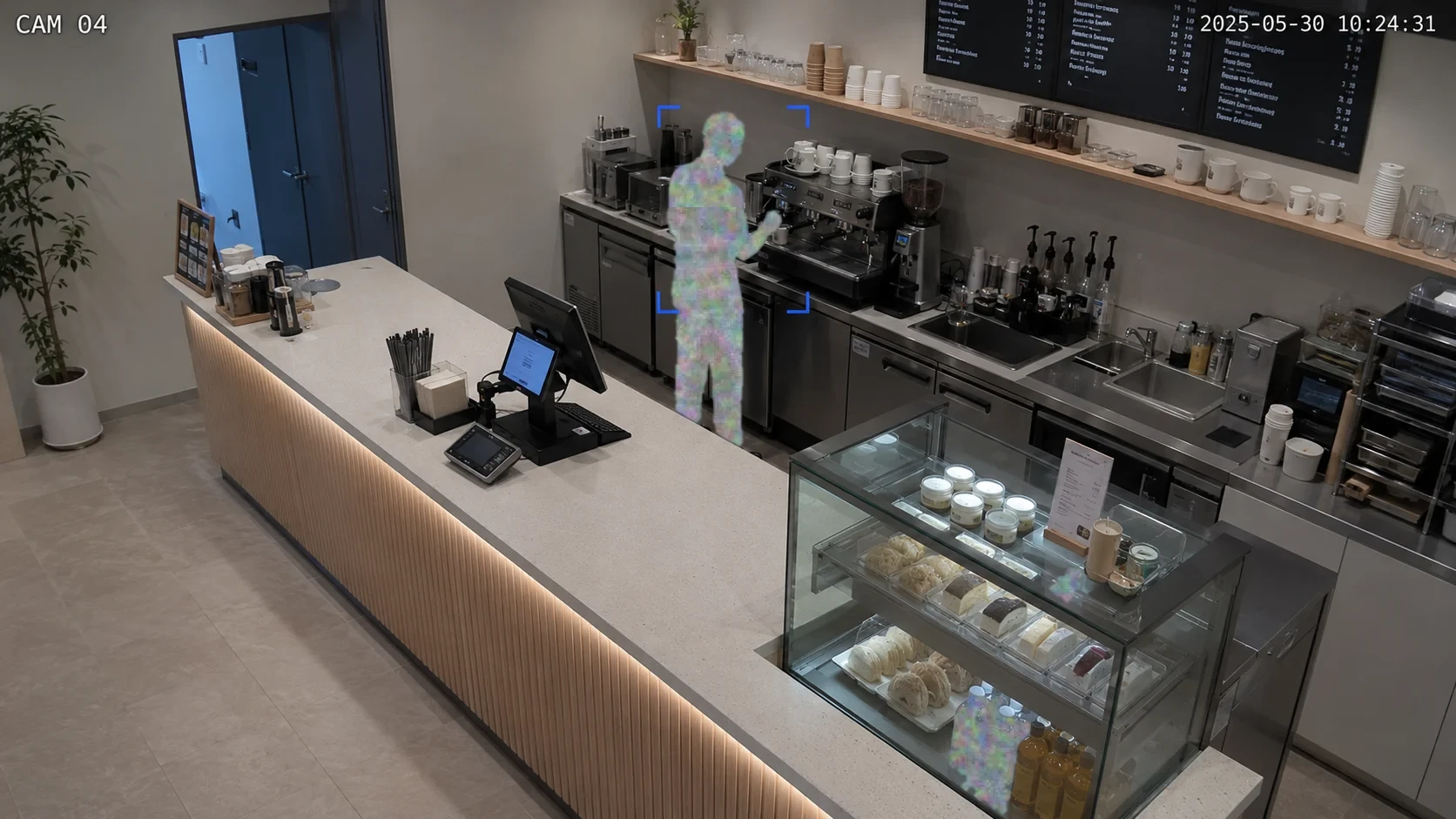
Automatic visitor count by time of day

Entrance cameras automatically tally visitor counts by time slot. Also measures queue length, queue clearance time, and walk-away rate.

Screens are illustrative and may differ from the actual service.

Before · After

From finding the result later, to receiving the signal first

Knowing first

saai care · saai insight · saai agent

How to manage lunch and dinner peak congestion and waiting in advance, based on data.

  • Automatic visitor count by time of day
  • Visit-pattern analysis and peak prediction
  • Peak forecast and preparation guidance

Decision flow

Connect the evidence from signal to action

01 · 01 Detect · saai care

Automatic visitor count by time of day

Entrance cameras automatically tally visitor counts by time slot. Also measures queue length, queue clearance time, and walk-away rate.

02 · 02 Analyze · saai insight

Visit-pattern analysis and peak prediction

Builds visit-pattern models by day of week and time slot using 2–4 weeks of cumulative data. Forecasts next week's congestion combined with weather and event data.

03 · 03 Act · saai agent

Peak forecast and preparation guidance

Sends real-time alerts on predicted visitor count and prep actions 30 minutes before peak hours. Includes actionable advice like "Peak expected at 1 PM today. Recommend 3-barista setup."

Operational evidence

See the scene and the outcome together

Expected results

The limits of preparing for peak hours

Teams may feel that “today looks busy,” but it is hard to predict exactly how many people will arrive at a given time. Adding staff early raises cost; adding too few creates complaints. With visit-pattern data, a café can predict demand for a window such as Thursday from noon to 1 p.m. and prepare with more precision.

-28%

Average peak-hour wait time

+15%

Peak-hour order throughput

4주

Time to complete the prediction model

* Figures are illustrative examples of real deployments. Actual results vary by site.

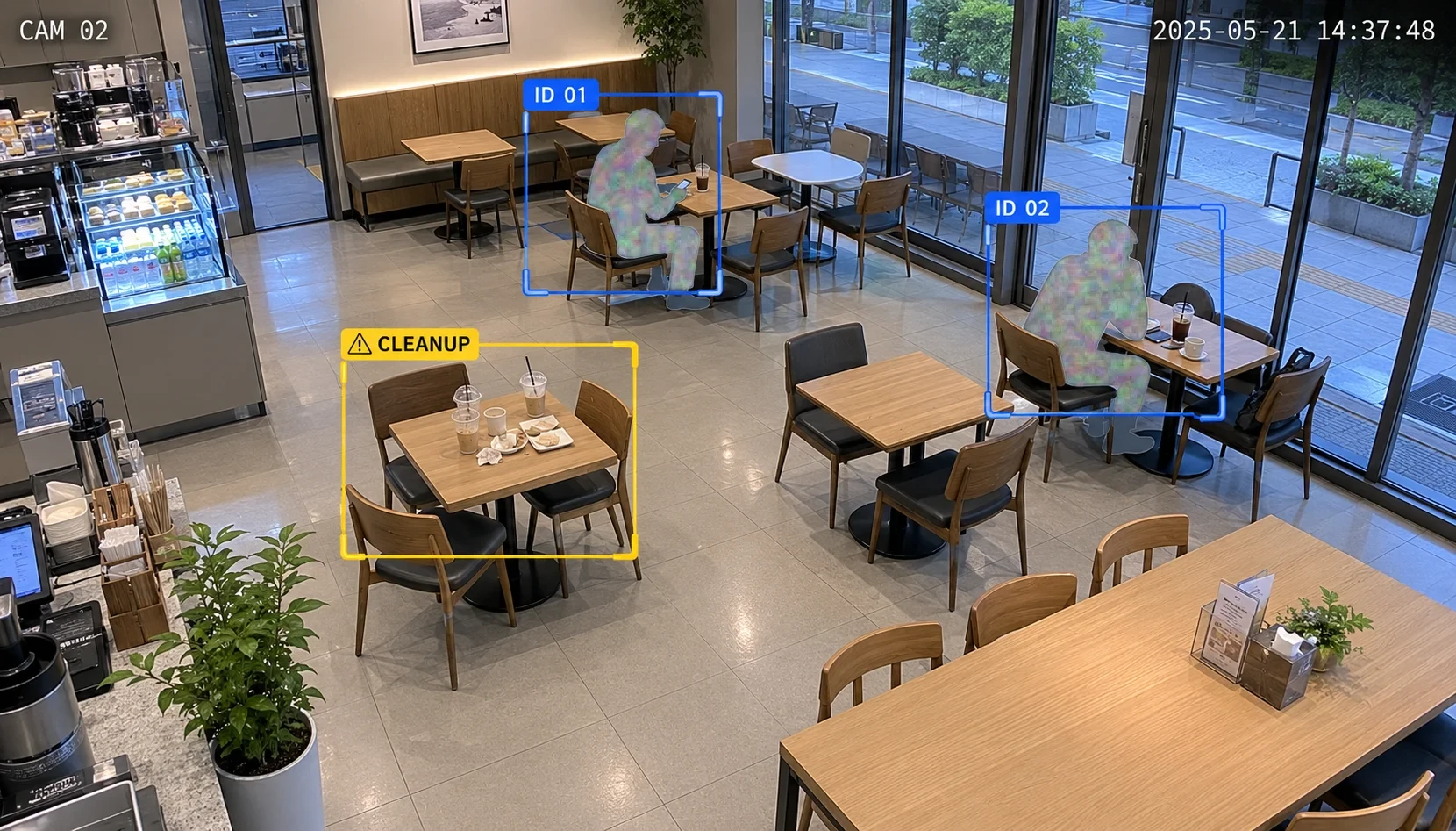
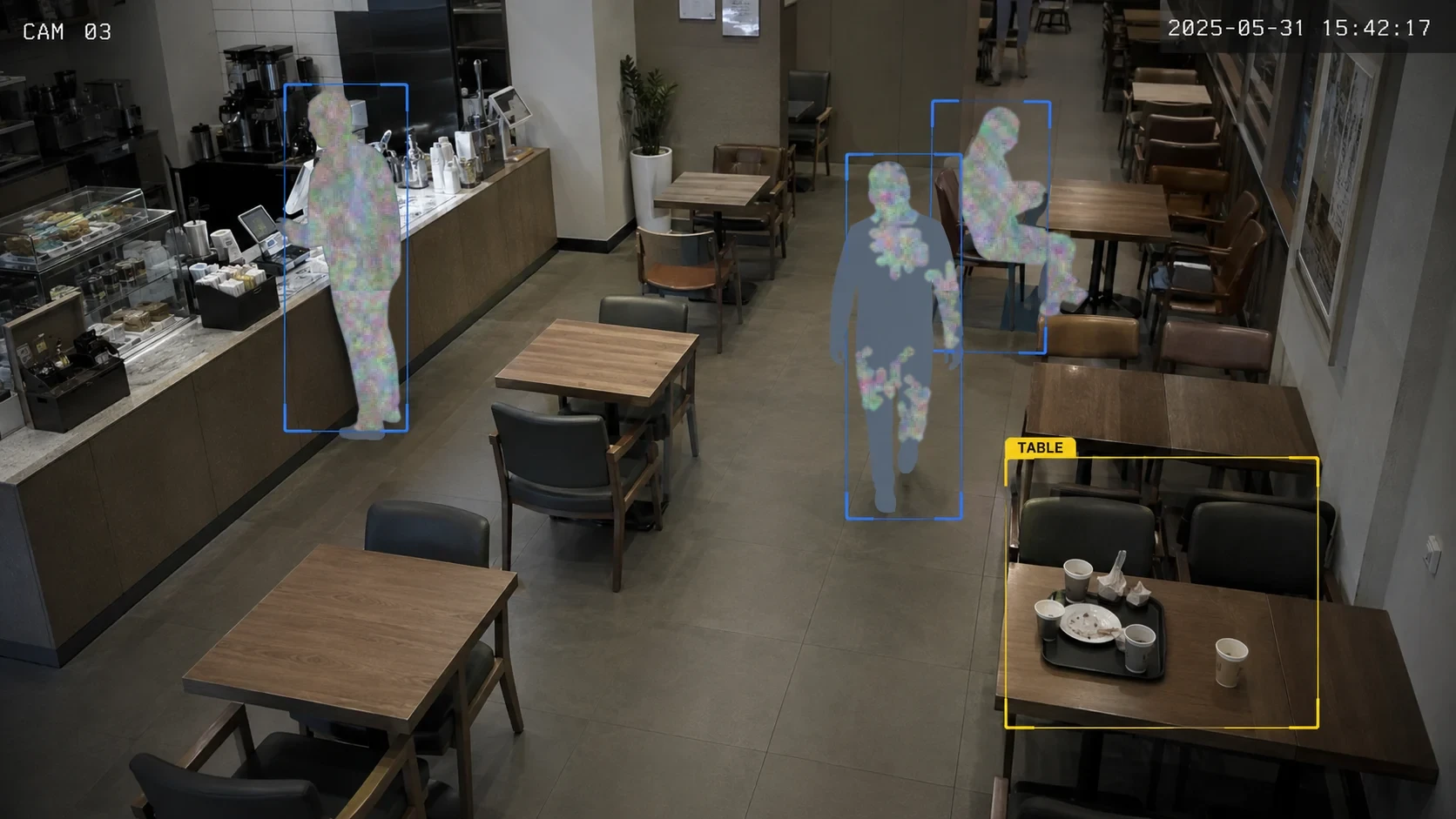
A café scene with a short counter queue and a staff member resetting a table
Operational context image · not an actual analysis screen

Case studies

See how it worked in a similar environment

View case studies

3 Core SAAI Products

How three products help this space together

Detect, analyze, and act connected in one continuous operating loop.

Detect

saai care

Detects critical anomalies in real time.

saai care Learn more
Analyze

saai insight

Analyzes why it happened and reveals trends.

saai insight Learn more
Act

saai agent

Proposes next actions by priority; a person confirms.

saai agent Learn more
  • 103 patents
  • SOC 2 · PIPA certified
  • 1,700+ cameras connected
  • 8+ partner brands

Could this work in your space too?

Tell us about your current CCTV setup and space. We will review a practical starting point with you.

Request a consultation