
If more shoppers than usual came in on the first weekend of the sale, can you say the new winter coat in the window did its job? When you draw up next weekend's staff rota, the number of people who came in is what matters. When you decide whether to keep the same coat in the window for another week, you need one more number. How many people walked past that window that day?
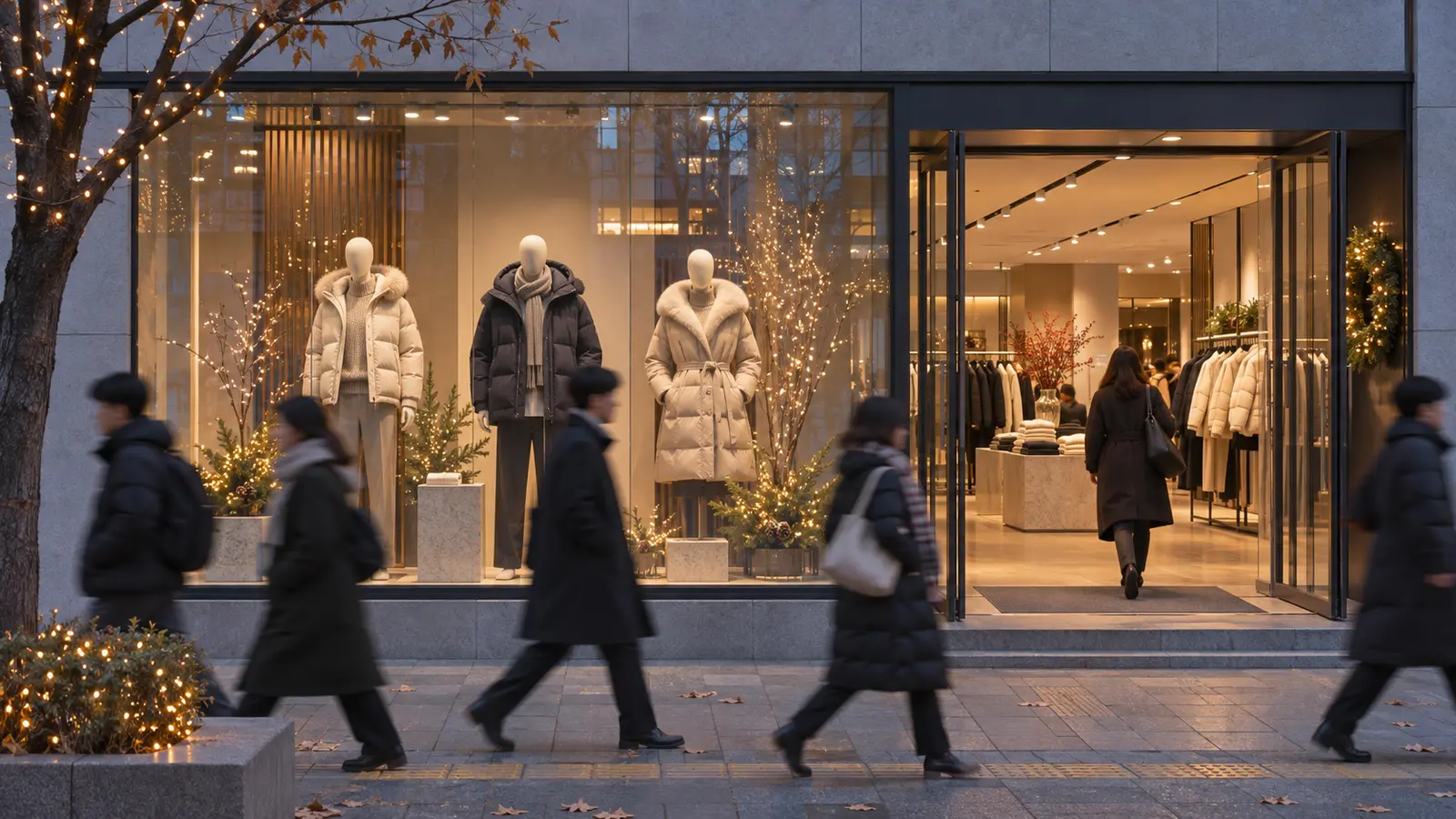
An AI-generated image of people passing and entering a clothing store at year end.
Year-end demand grows, but every store's situation is different
This September, sales at major offline retailers in Korea rose 5.1% from the same month last year. Korea's Ministry of Trade and Industry said gift sets and holiday food sold more because Chuseok came earlier than last year. In November, the Korea Grand Festival ended on the 15th, but some of its discounts ran until the end of the month. When events overlap like this, you cannot compare this week's visitor count with last week's directly, because the number of people out on the street may have changed first. September retail sales trends (Korean) · Korea Grand Festival notice (Korean)
The National Retail Federation (NRF) forecasts that US retail sales in November and December this year will grow 4.2% over last year. In the same organization's consumer survey, 32% of respondents said they would cut back on other spending to cover holiday shopping. Even if sales grow across the season, each shopper still chooses what to buy within a set budget. So on the days when shoppers crowd the streets, does the share of people who stop and walk into your store rise as well? NRF holiday forecast · NRF consumer survey
Foot traffic outside the store rose to about 2.2 times normal
A fashion and sports brand expected sales to rise when holiday crowds arrived. DEEPING SOURCE used saai insight to compare the same hours on holidays and on normal days, and foot traffic outside the store was indeed about 2.2 times its normal level. But the share of those passers-by who came in, the capture rate, fell below the normal average.
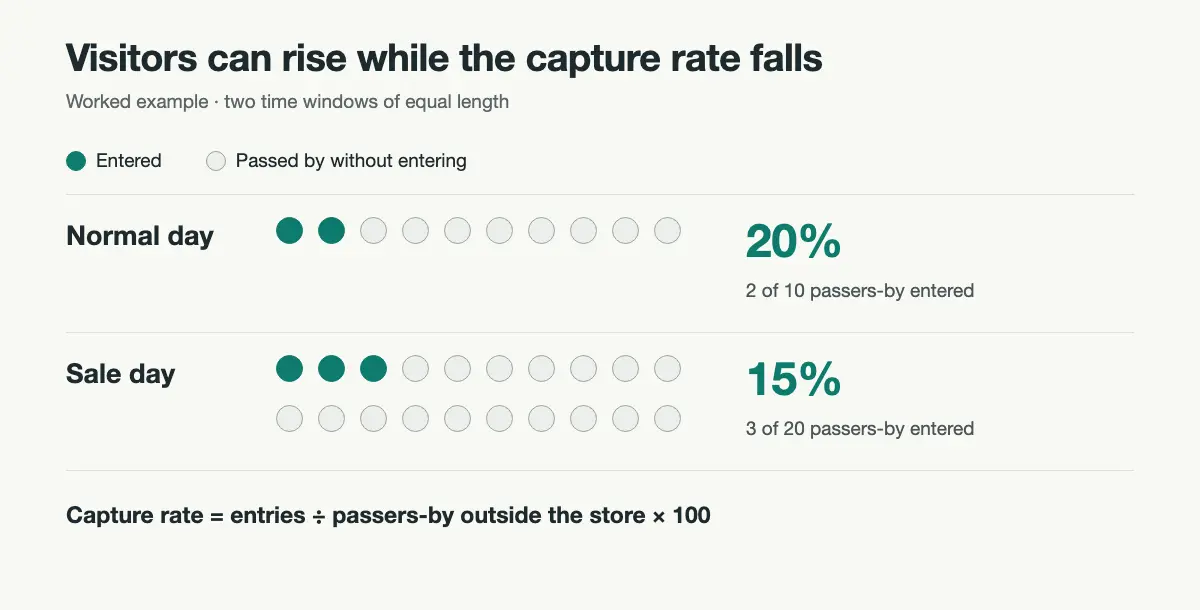
Entries can rise while the capture rate falls. The numbers in the figure are a hypothetical example for the calculation.
Splitting the analysis by age band showed a difference worth using at the next event. Over the holiday, the age band above the brand's core target came in at a higher rate than the core target itself. The brand used the hours with a low capture rate and the age band that actually came in more often to replan the entrance display, in-store promotion and ad targeting for the next holiday. Results after the new plan was applied have not been published yet. DEEPING SOURCE fashion and sports store case
Where to make changes depends on how far shoppers got
Where should you start in your own store? Before changing the window, decide which stretch in front of the entrance you will count people passing through. Record foot traffic and entries for the same day of the week and the same hours as usual, and note when you changed the display. After the event, compare the two numbers at the same spot by the same rule. You will see how the share of people entering your store changed relative to how busy the street was.
What you need for this is a record of shopper movement and dwell, aggregated by zone. DEEPING SOURCE's Anonymizer removes the regions that reveal identity at the video input stage and keeps the signals needed to analyze paths and dwell. How video anonymization works
If entries rose but the sale items did not sell as expected, the next place to look is the display. Check whether shoppers reached the display and how long they stayed in front of it, then match that against POS sales records for the same store and hours. If few people reach the display, check whether the sale signage can be seen from the entrance. If people gathered at the display but sales were weak, you can start by checking stock and price labels for the sale items. Reading the shelf funnel before changing a display
If the crowd reached the area beside the checkout, find where the queue ends. Shoppers who have finished paying and are waiting for companions also stay in that area. Set the waiting zone before the event, and decide how many people waiting for how long should mean calling more staff. Then a crowding alert is easier to act on. If the real queue is long, add support at the checkout. If the queue is short but the next aisle is blocked, look at where the display sits. After acting, check again whether waiting time went down and whether the end of the queue has moved into the next aisle. Queue and crowd analysis guide · saai queue
In your next sale report, write the number of people who walked past the window next to the Saturday afternoon visitor count for the same hours. When you discuss whether to keep that coat at the entrance next weekend, you can start with both numbers side by side.
