
Solutions by space
A different space,
a different answer.
We have built reading standards across more than 100 spaces. Explore applications through industry solutions and measured cases.
Solutions by industry
Start with the challenges closest to your space
22 solutions
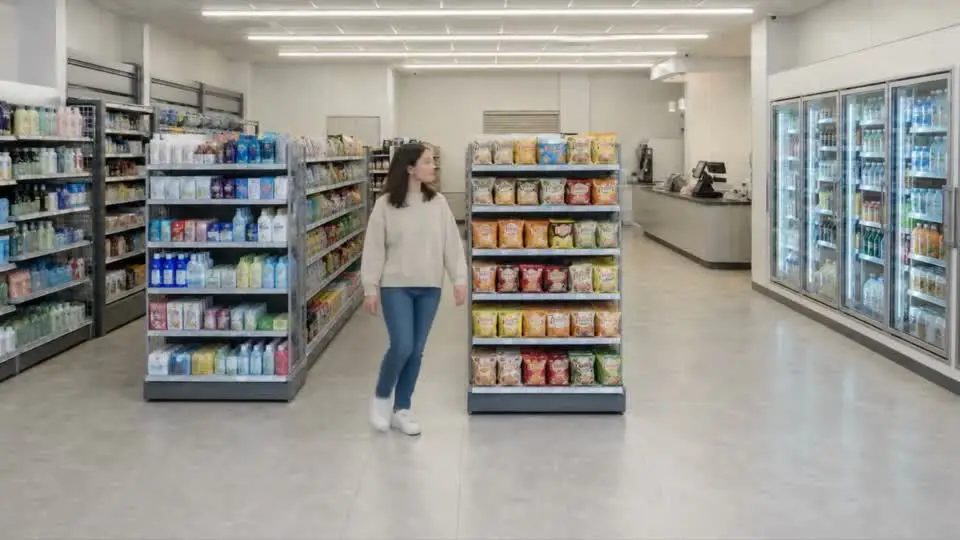
Convenience stores
Industry overviewCafés & restaurants
Industry overviewUnmanned stores
Industry overviewDrugstores
Industry overviewHypermarkets
Industry overviewExhibition spaces
Industry overviewLogistics & warehouses
Industry overviewShowrooms & experience centers
Measured cases
See what changed after the change.
Change rates are measured values. Store names and absolute figures are reconstructed to protect customers.
Further reading
How to read spatial data
Insight
Capture rate — the first number that tells a location problem from a store problem
When revenue falls short, the first argument is always 'is it the location, or is it the store?' POS data can't answer that. The capture rate — footfall outside counted against the customers who walk in — can.
Insight
A complicated path, reduced to one flow
Lay out every path between displays and there's nothing left to read. A Sankey chart leaves only the flow that matters, using thickness alone.
Insight
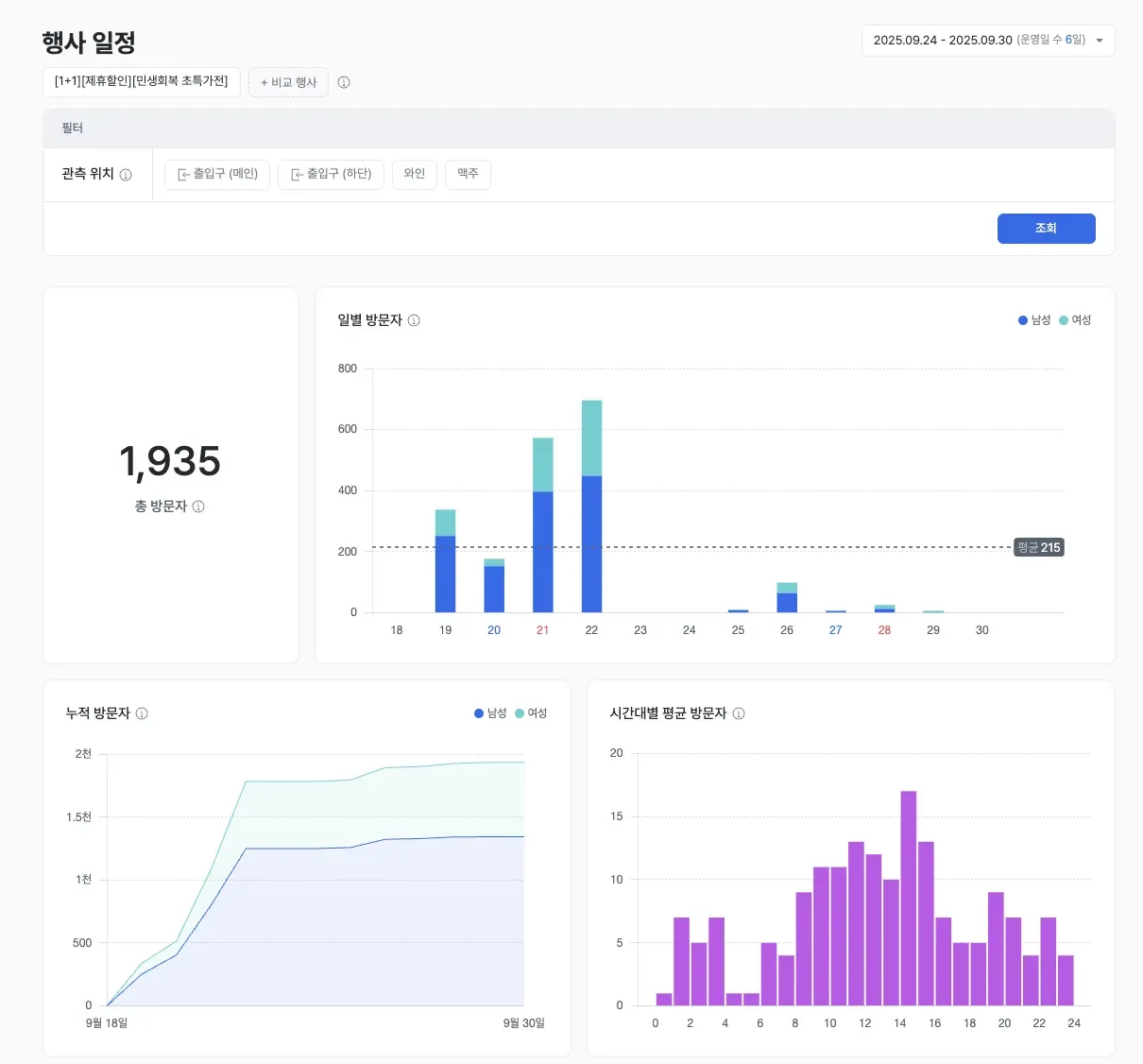
Did that event actually work
Once an event wraps, it's easy to judge success by feel alone. Auto-collect visits, dwell, and interest during the event window, and you can compare it in numbers instead.
FAQ
Anything you want to ask?
Privacy · equipment · pilot scope. Starting with what comes up most.
What gets in the way differs by space. If your question is not here, send it to us. Ask us
Explore adoption
Tell us what is getting in the way. We will help you find where to start.
Tell us what kind of space you run and what needs attention. We will start with a similar case.